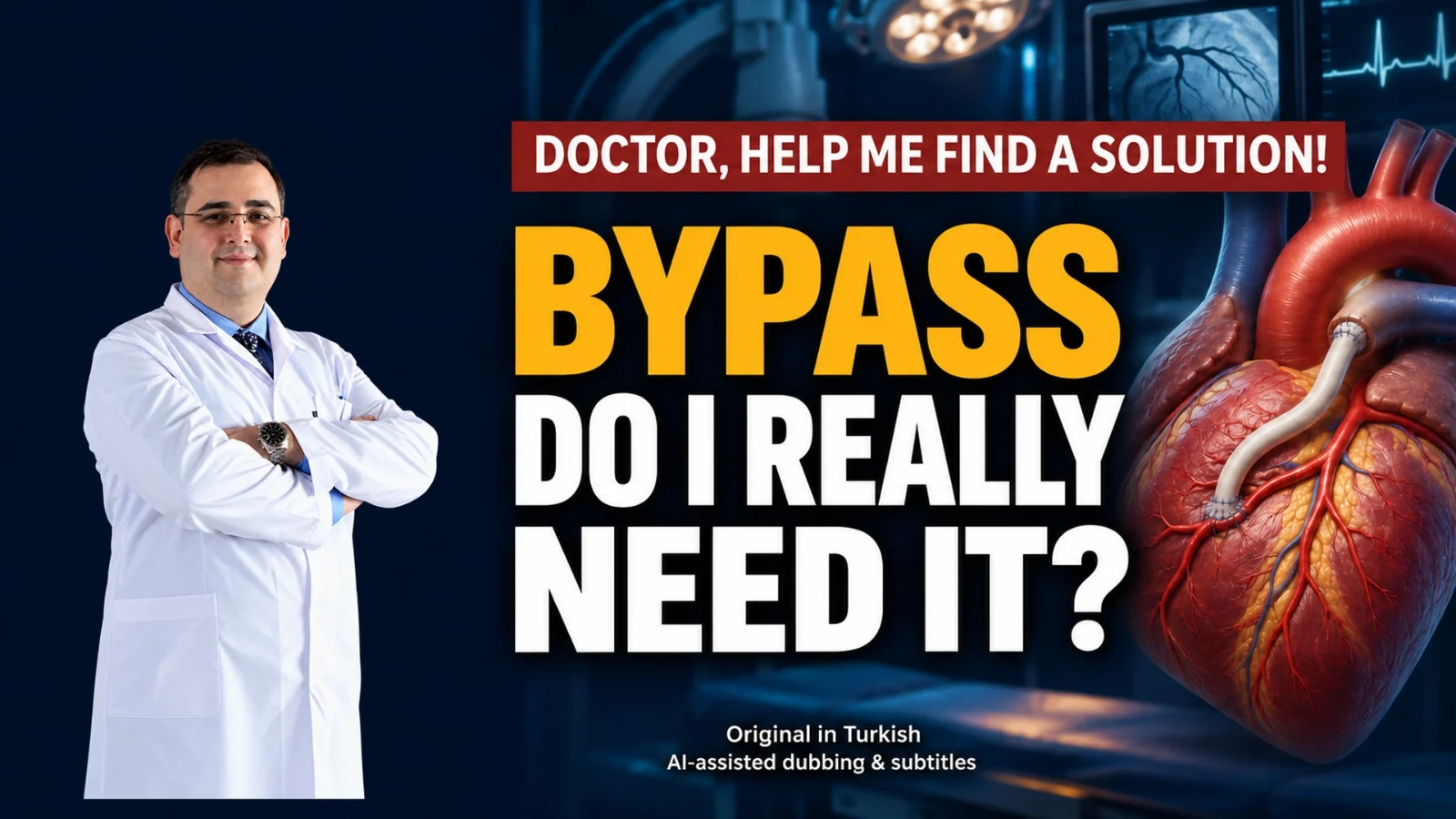
Being advised to have coronary bypass surgery after an angiogram can understandably cause concern. One of the questions patients most often ask is:
“Could you open the artery with a stent instead? Do I really need surgery?”
There is no single answer that applies to everyone. A stent may be a suitable alternative for some patients, while bypass surgery offers clearer long-term advantages for others.
What matters is not simply whether an artery can be opened, but what the treatment is expected to achieve for the patient.
What Is the Difference Between a Stent and Bypass Surgery?
Narrowing of the coronary arteries can reduce blood flow to the heart muscle. Balloon angioplasty, stents and bypass surgery aim to improve this blood supply.
During a stent procedure, the narrowed area is reached from inside the artery. It is widened, and a stent is placed to help keep it open.
During coronary artery bypass grafting (CABG), a blood vessel taken from elsewhere in the body creates an alternative route for blood to reach the artery beyond the narrowing.
Both approaches have benefits and risks. The choice depends on the patient and the characteristics of their coronary disease.
When Is Bypass Surgery More Likely to Be Recommended?
Not every narrowed artery requires bypass surgery. However, the evidence supporting surgery is stronger in certain situations.
Patients who are suitable for surgery and have extensive, complex disease affecting several arteries may benefit more from bypass surgery. Diabetes is another important factor. In these groups, long-term outcomes may be better with bypass surgery than with stents.
Significant narrowing of the left main coronary artery, which supplies a large part of the heart, or markedly reduced pumping function also influences the decision. These findings do not mean that every patient needs the same treatment. Stenting can be an option for selected patients with left main disease and suitable anatomy.
Broad statements such as “Three-vessel disease always requires surgery” or “If a stent is possible, surgery is unnecessary” are therefore misleading.
Why Recommend Bypass If a Stent Is Technically Possible?
Being able to perform a procedure and choosing the most appropriate treatment are different questions.
We consider more than the likelihood of immediate procedural success. We also assess symptom relief, the effect on long-term risks and the likelihood of needing another intervention.
For example, in extensive, complex multivessel disease, particularly with diabetes, bypass surgery may provide more durable revascularization and reduce the need for repeat procedures. It also has its own surgical risks and a longer recovery period.
The question is therefore not only “Can this artery be opened with a stent?”
We should also ask: “What benefits and risks would that approach bring for me?”
What Factors Guide the Decision?
Angiogram images are important, but they are only part of the assessment.
The extent and complexity of coronary disease, the heart’s pumping function, conditions such as diabetes, kidney function, overall health and surgical risk are considered together. The patient’s expectations and preferences are also part of the discussion.
When the best approach is unclear, a Heart Team assessment, involving an interventional cardiologist and a cardiac surgeon, is particularly valuable.
This assessment may reinforce a recommendation for bypass surgery. In other cases, high surgical risk or suitable coronary anatomy may favour an alternative.
Can I Have a Stent If I Do Not Want Bypass Surgery?
Sometimes this is possible. However, declining surgery does not automatically make stenting a safe or adequate alternative.
The reasons for the recommendation should be discussed again. It is important to understand your concerns about surgery, what you expect from the alternatives and which risks you are willing to accept.
Medical therapy continues, while the suitability and limitations of stenting are assessed separately. If an alternative is unlikely to provide the expected benefits of bypass surgery, that should be explained clearly.
Claims such as “We saved you from bypass surgery” can therefore be misleading. Avoiding an operation does not, by itself, demonstrate that a better treatment was provided.
Can I Wait to Get a Second Opinion?
Seeking a second opinion before a major decision such as bypass surgery is understandable. Reviewing the angiogram can help clarify the recommendation and the alternatives.
Whether it is safe to wait depends on the clinical situation. Ongoing or new severe symptoms, a heart attack or circulatory instability may require urgent assessment.
It would therefore be inappropriate to tell every patient that waiting a few days is safe. Ask your treating team how much time you have to seek a second opinion.
Does a Stent or Bypass Cure Coronary Artery Disease?
No. These procedures improve blood flow to the heart muscle, but they do not eliminate the underlying atherosclerotic disease.
Medication, cholesterol and blood pressure control, diabetes management, avoiding smoking and appropriate physical activity remain important after treatment. Cardiac rehabilitation can also support recovery when indicated.
Having an artery treated does not mean that medication and follow-up are no longer needed.
A stent or bypass operation is one part of long-term care. Protecting cardiovascular health afterwards is just as important as choosing the procedure.
What Should You Ask Your Doctor?
If bypass surgery is recommended, these questions may help:
- Which features of my condition make bypass surgery preferable?
- Is the expected benefit symptom relief, a reduction in long-term risks, or both?
- Is a stent a suitable alternative for me? What are its limitations?
- What are my individual surgical risks and expected recovery time?
- How long can I safely wait to obtain a second opinion?
The answers can help you understand your options and participate meaningfully in the decision.
As cardiologists and cardiac surgeons, our shared aim is to identify the most appropriate treatment for you. Understanding the reasons behind the recommendation and feeling comfortable asking questions are important parts of your care.